Basic Pastry Dough - Recipe
Let’s have a word with you people who are afraid of making pastry crusts. I've been there. We can get you through this and have you making tender, flaky crusts. It really isn't difficult, you just have to focus on a few details:
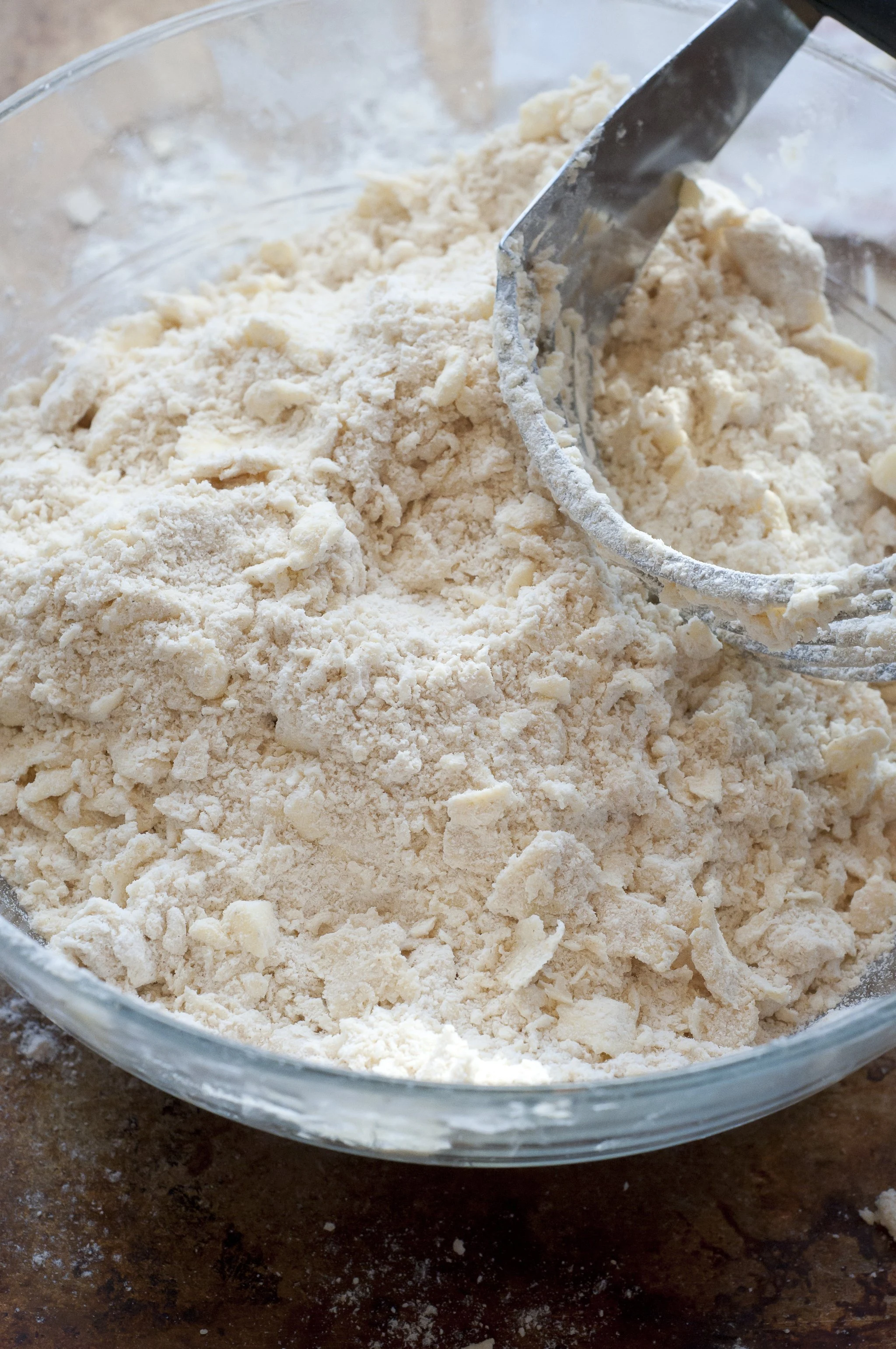
Our whole goal here is to get well distributed pockets of butter that will separate layers of the dough, while minimizing gluten development. I really like to use a pastry blender, a simple hand tool with several blades that cut the butter in to the flour. My hands are too warm, and dirtying a whole food processor makes more work than necessary.
If you don’t have a pastry blender, you can cut the butter into the flour using two butter knives, or work it in with your fingers, or pulse them together in the food processor, being sure to stop when you reach the “oatmeal” stage. The food processor can also mix the water in for you.
Basic Pastry Dough
Serves 6 / 30 minutes active (3 hours total)
- 1 cup all-purpose flour
- 1/4 teaspoon salt
- 6 tablespoons very cold butter cut into small cubes; if frozen you can cut it carefully into slivers with a bread knife
- 2-4 tablespoons ice water
- In a bowl, combine the flour, salt, and butter. Using a pastry blender or your hands, work the butter into the flour until it mostly looks like coarse oatmeal. Limit this to at most 2 minutes. It is fine if there are still some larger chunks of butter. (If using a food processor, pulse for two seconds at a time).
- Add two tablespoons of the ice water. Work this in with a fork for 60 seconds, then try to press a piece together with your hands. If you can form a ball, you are done. If not, add more ice cold water, a couple teaspoons at a time until you can make a big shaggy ball. You really want to err on the side of minimal water, and keep the total time for this step again to less than two minutes. It is fine if there is a little bit of unincorporated flour left at the bottom. (The reason the water varies is it depends on the moisture content of both your flour and your butter.) (If using a food processor, add the water and process until a shaggy ball pulls away from the container.)
- Dust a work surface with flour and flatten the dough into a disk, about 7" in diameter. Wrap it in plastic wrap, or better yet, put it in a gallon freezer bag. Press any little cracks in the edge together - this will make it easier to roll out. Refrigerate for at least one hour and up to two days.
- Remove the dough from the refrigerator and let warm up a bit until slightly pliable. This could be anywhere from 5 to 20 minutes depending on how well chilled it is. While still wrapped, give it several cathartic thwacks with your rolling pin to get a head start on rolling out. Now put it on your floured board, flour your rolling pin, and roll out to the desired shape for your final recipe.