
Spare The Fat, Spoil The Flavor - Making Your Food Pop, Part 3
This post contains affiliate links; if you buy through them I may earn a small commission at no cost to you. Learn more.
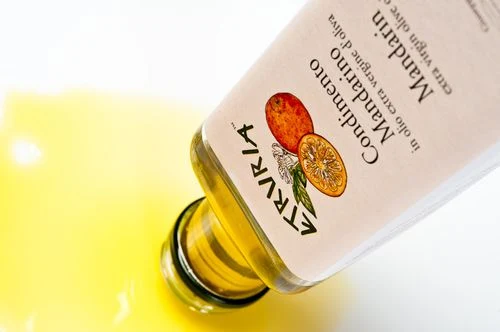
Superb EVOO infused with Mandarin from ChefShop.com
I'm not the first person to observe that Americans have a crazy, conflicted relationship to fat. We love it, and eat far more of it than probably just about any other country in the world. God knows we have the obesity epidemic to show for it. At the same time, we fear it mightily, speaking in terms like sin and indulgence as if there were a higher power monitoring our every fat gram.
More than anything, we don't like to see liquid fat on our food. A drizzle of extra virgin olive oil over a plate of sauteed broccoli raab or a small slick of ghee on the chana masala is thought of as greasy and repulsive, even though in their native lands (Italy and India, in this case), those fats would be considered the mark of a wholesome, delicious meal.
The bizarre thing is, if you take ten times that amount of fat and put it in a obscenely large slice from the Cheesecake Factory, most people will say "oh, just this once". So that is what restaurant chefs do, they use (and frequently hide) quantities of fat that would make most home cooks blanch in horror, and then you wonder why it is that their food tastes so good.
People, it is time for some sanity.
You don't need to fear fat. You just need to learn how to use it in moderation, and generally eat in moderation. If you skip that cheesecake and the triple cheeseburger with fries, or at least only eat them only occasionally, you can afford to have a decent amount of oil in your stir-fry and even a pat of delicious, sweet cream butter on your morning toast. One of life's best things, and there is no substitute.
Why does a little fat make food so good? Three main reasons: it carries flavor (because it can dissolve aroma compounds that aren't soluble in water), it feels good in your mouth, and it transmits heat efficiently. Not counting of course the more technical things fat does, especially in baking.
Try this experiment, either in your mind or in your kitchen. First, steam a big handful of green beans and toss them with salt and raw garlic, or garlic that has been roasted with no fat.
Now mince 2 or 3 cloves of fresh garlic. Take another handful of green beans heat up a saute pan quite high, add a tablespoon of extra-virgin olive oil, half of the minced garlic and, a few seconds later, saute the beans, adding a pinch or two of salt, until they are getting some nice dark, caramelized spots. When they have about two minutes to go, add the rest of the garlic.
Which dish tastes better? The first one tastes dull and vegetal. If you used raw garlic, it will be harsh and poorly distributed. The roasted garlic might be better but will likely be just sweet and anemic.
In the second dish, the oil will have picked up the flavor compounds from the garlic and distributed them throughout the food. The garlic will neither be as pungent as it was raw nor mild as it would be roasted. Its intoxicating aroma will have spread throughout your house, whetting everyone's appetite. The beans will have beautifully blistered skin courtesy of the low-moisture heat transfer. And when you eat those beans, the slight amount of oil on their surface will contribute a sense of richness that contrasts nicely with the vegetable itself. Done right, they should taste amazing.
So you tell me, was it worth that small increment of calories?
11 Comments
Comments are closed.