
Chana Dal in the Style of Puri Jagannath Temple - Recipe
This post contains affiliate links; if you buy through them I may earn a small commission at no cost to you. Learn more.
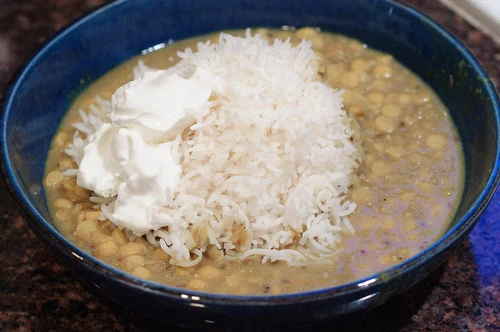
Chana Dal in the Style of Puri Jagannath Temple
Every time I eat some form of beans and rice, I ask myself why I don't do that at least 3-4 times a week. Not because of the health factor (though it is great for you), or because it is famously inexpensive. Just because I find it so satisfying. It has that ability to make me feel like all is right with the world.
Dal, of course, is simply the Indian word for the whole range of dried beans and lentils, as well as the name for a soup or thick stew made from them. Some form of dal is on the menu at pretty much any Indian meal, whether humble or royal. The famous Bukhara restaurant in the Maurya Sheraton in Delhi serves a black-gram dal rich with an astonishing amount of ghee (clarified butter). The typical dish is much leaner!
There are many varieties of dal, but lately I've grown fond of chana dal, which comes from small, split brown chickpeas with their seed coats removed. They cook much more quickly than normal chickpeas, but can retain a bit of integrity and texture instead of falling completely apart. You can find them at any Indian grocery, or (at greatly inflated but still cheap enough prices) at Whole Foods.
I was looking for a new chana dal recipe and came across this one from the Puri Jagannath Temple via the Oriya Kitchen website. I adapted it slightly to suit what I had in the house. I happened to only have 1.5 cups of chana, so I made up the difference with red lentils. I figured the red lentils would completely dissolve and create some sauce to surround the chana dal, and that worked out just fine. I also used dried coconut instead of fresh, and powdered cinnamon instead of whole sticks.
I found it interesting that this recipe calls for more of the "sweeter" spices (cinnamon, cloves, coriander) to be added early, and the more pungent ones (mustard, fennel, cumin, fenugreek) in the last minute tempering. "Tempering" (in this case) means to fry the spices in a bit of oil or ghee and add them to a dish at the last minute so as to be able to fully appreciate their volatile compounds. It is a valuable technique that you will find used in many Indian recipes.
At any rate, here is my version of the Puri Jagganath Temple dal, adapted to my kitchen. Apologies in advance if anyone feels I haven't done proper service to the original recipe, but I thought it was delicious. Serve it forth with a bowl of basmati rice and some plain yogurt or raita, and you've got a great one-pot meal. Or use it as a side dish in a more elaborate feast. You can adjust the texture to a thinner soup or a thicker stew-like consistency, just by cooking a little longer or adding more water.
Puri Jagganath Temple Chana Dal, Herbivoracious Style
Serves 4 as a main course with rice, or 8 as a side dish
Vegetarian and gluten free; vegan if you use oil instead of butter
- 1.5 cups of chana dal
- 1/2 cup red lentils
- 1 teaspoon turmeric
- 2 teaspoons salt
- pinch of sugar
- 1/4 cup dried unsweeted coconut
- 2 teaspoons cinnamon
- seeds from 4 cardamom pods or 1 teaspoon cardamom powder
- 4 whole cloves or 1/4 teaspoon clove powder
- 1 teaspoon freshly ground black pepper
- 1 teaspoon cumin seeds
- 1 teaspoon coriander seeds
- 1 tablespoon ghee, butter, or vegetable oil
- 1 teaspoon cumin seeds
- 1 teaspoon black mustard seeds
- 1 teaspoon fennel seeds
- 1 teaspoon fenugreek seeds
- optional: cilantro for garnish
- Carefully pick through the dals looking for any stray pebbles and such. Rinse them thoroughly. Bring to a boil with 4 cups of water, the turmeric, salt, and sugar. Reduce heat to a simmer and cook, stirring occasionally until the chana dal is almost tender. Don't let them scorch, and do add more water as needed.
- Meanwhile, in a small food processor, combine the coconut, cinnamon, cardamom, cloves, black pepper, 1 teaspoon of cumin seeds, and coriander seeds with 1/2 cup of very hot water. Puree until it is a rough paste and the coconut has started to soften. Add more water if needed. Add this mixture to the dal and cook for 20 more minutes.
- Just before serving, heat the butter over a medium-high flame in a small skillet and toss in the remaining cumin seeds along with the mustard, fennel, and fenugreek. Fry for about a minute, until the mustard seeds begin to pop. Don't burn the seeds. Stir them into the dal, taste for any final season adjustments needed, garnish with cilantro, and serve.
14 Comments
Comments are closed.